
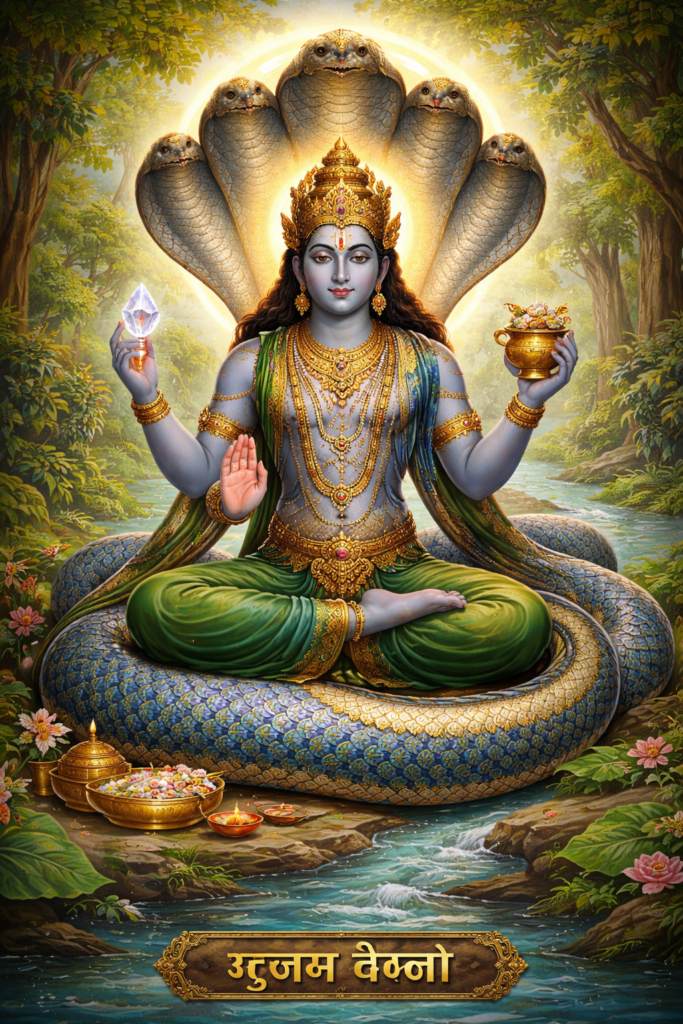
🐍 Bhujang in Vastu: Meaning, Energy and Importance
Bhujang in Vastu
Bhujang in Vastu refers to a powerful and subtle energy that influences wealth, health, and life flow. The term Bhujang (भुजंग), also written as Bhujaga, comes from Sanskrit. “Bhuj” means to bend, and “Anga” means body. Together, it means something that moves in a curved or coiled manner.
This term commonly refers to a serpent. However, in Indian knowledge systems, Bhujang represents much more than a physical snake. It symbolizes a hidden, dynamic, and coiled cosmic energy that operates beneath the surface of reality.
Bhujang in Vedic Literature
Ancient texts like the Rigveda and Atharvaveda describe serpent-like energies using terms such as Ahi and Sarpa. These terms represent primordial forces connected to nature, cosmic waters, and unseen realms.
These references do not describe ordinary animals. Instead, they explain forces that:
- Protect hidden resources
- Sustain life processes
- Regulate unseen natural systems
A key reference appears in the Atharvaveda (Book 3, Chapter 12). It describes serpentine energies as protectors of treasures hidden within the earth. This connects Bhujang with Nidhi (hidden wealth) and underground energy systems.
Association with Cosmic Forces
Bhujang energy connects with deities like Varuna and Mitra. Varuna governs cosmic waters and universal laws, while Mitra represents harmony and agreements.
In Vedic hymns, serpent energy is described as the “Paash” (noose) of Varuna. This symbolizes:
- Control
- Binding forces
- Karmic regulation
This shows that Bhujang actively regulates hidden forces rather than acting passively.
Bhujang and Nāga Concept in Puranas
As Indian philosophy evolved, Bhujang developed into the concept of Nāgas. These are semi-divine serpent beings living in Patal Lok (subterranean realms).
Texts like the Mahabharata and Bhagavata Purana describe Nāgas as powerful guardians of energy and wealth.
Important Nāga figures include:
- Shesha – supports the universe
- Vasuki – used in cosmic ocean churning
- Takshaka – ruler among Nāgas
These beings operate between divine order and raw cosmic power. They support both Devas and Asuras depending on the situation.
Bhujang in Yoga and Kundalini Energy
In Yoga and Tantra, Bhujang represents inner spiritual energy. Texts like the Hatha Yoga Pradipika and Shiva Samhita explain the concept of Kundalini.
Kundalini is a coiled energy located at the base of the spine in the Muladhara Chakra. When awakened, it rises through the Sushumna Nadi and activates higher consciousness.
Bhujang here represents:
- Creative power
- Transformation
- Spiritual growth
This energy also connects with life force and reproductive vitality. In Tantra, it represents Shakti, the divine feminine energy.
Connection with Healing and Medicine
Bhujang also relates to healing systems. In Vedic thought, serpents guard medicinal knowledge, especially herbs found in hidden regions.
This idea reflects a deeper truth:
- The same force can harm or heal
- Balance determines the outcome
This concept aligns with Dhanvantari, the deity of health and medicine. Bhujang supports life by maintaining balance within natural systems.
Bhujang in Vastu Shastra
In Vastu Shastra, Bhujang in Vastu occupies a sensitive position in the Vastu Purusha Mandala. It lies in the North or North-Northeast zone, near Soma.
This placement is important because:
- North represents wealth and opportunities
- Soma represents emotions and fluidity
Bhujang energy here appears subtle and flowing, often described as blue-toned. It behaves like a hidden current beneath the surface.
Effects of Balanced and Imbalanced Bhujang
When Bhujang is balanced:
- Smooth financial flow
- Stable health
- Emotional balance
- Strong relationships
When Bhujang is disturbed:
- Financial blockage
- Hidden health issues
- Anxiety and stress
- Personal life disturbances
Disturbance can occur due to:
- Clutter
- Poor construction
- Wrong space usage
Psychological Meaning of Bhujang
Bhujang represents the subconscious mind. It governs hidden thoughts, emotions, and instincts.
Like a serpent moving unseen, this energy works beneath conscious awareness. When balanced, it enhances:
- Creativity
- Intuition
- Adaptability
When imbalanced, it causes:
- Fear
- Insecurity
- Blocked growth
Bhujang is not just a symbolic serpent. It represents a universal principle of hidden energy, transformation, and continuity.
Across Vedas, Puranas, Yoga, and Vastu, Bhujang consistently reflects unseen forces that sustain life and regulate flow.
In Vastu Shastra, Bhujang plays a vital role in maintaining wealth flow and life balance. Understanding this energy helps improve both physical spaces and personal well-being.
Latest blog
Brahma – Brahmasthan in Vastu : Meaning, Importance and Guidelines
Bhujang , The serpent energy
Mar





Harness the Power of the Sword Through Vastu
Harness the Power of the Sword Through Vastu Shastra
Jul