
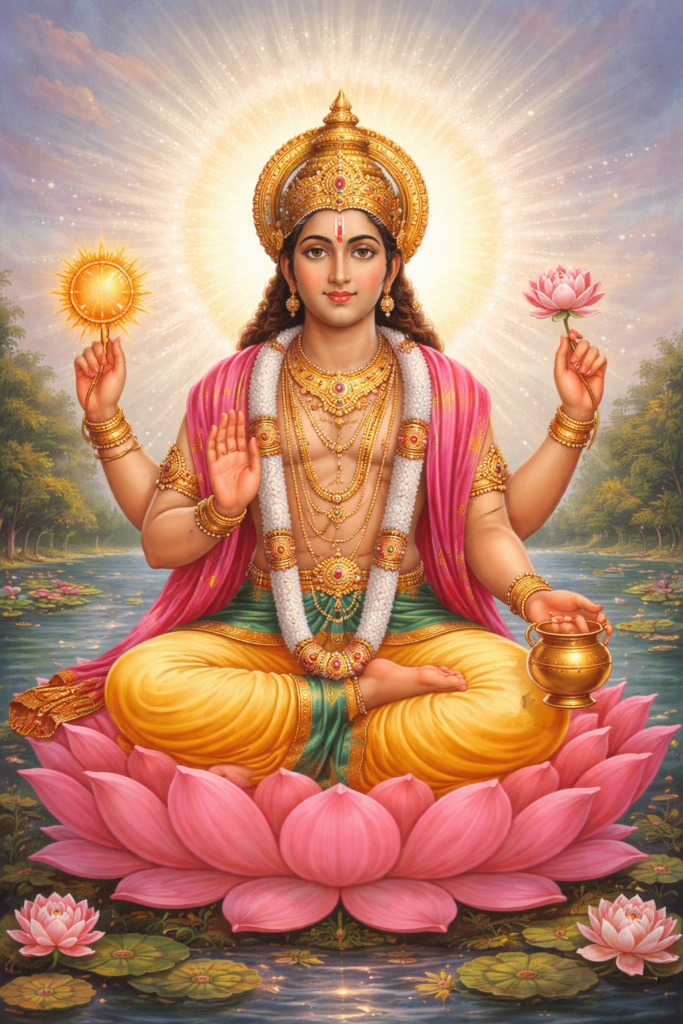
MITRA in Vastu: Meaning, Energy and Importance
The term Mitra originates from the Indo-European root “mi / mei,” which conveys the meanings “to bind,” “to unite,” and “to measure.” In its earliest conception, Mitra is not merely a deity in the anthropomorphic sense but a cosmic principle of cohesion, representing the subtle force that binds individuals, societies, and universal elements into an organized and functional whole.
This principle predates the structured Vedic religion and can be traced back to the Proto-Indo-Iranian cultural continuum, where Mitra appears as a shared divine concept across ancient Indian and Iranian civilizations.
In the Iranian tradition, particularly within Zoroastrianism, Mithra evolves into a powerful solar and contractual deity associated with truth, agreements, and moral order. This parallel clearly establishes that Mitra’s essential nature as a guardian of agreements and harmonizer of relationships existed long before the formal compilation of the Vedic corpus.
Early cultural and anthropological interpretations suggest that Mitra functioned as a regulator of social trust, ensuring stability within tribal and communal structures. Thus, in the pre-Vedic consciousness, Mitra is best understood not as a form, but as a principle of relational intelligence, governing both human interactions and cosmic harmony.
Mitra in the Vedic Corpus: Foundation in the Rigveda
The earliest authoritative references to Mitra are found in the Rigveda, where he frequently appears in association with Varuna as the dual deity Mitra-Varuna. Together, they govern the principle of Rta, the cosmic order that sustains the universe. Within this duality, Varuna represents the vast, unseen, and often awe-inspiring dimension of universal law, while Mitra embodies its gentle, relational, and harmonizing expression.
Mitra is repeatedly invoked as the sustainer of friendships (maitri), the upholder of truth and agreements, and the deity who inspires cooperation among beings. He is also symbolically associated with daylight, representing clarity, transparency, and conscious awareness. The hymns of the Rigveda emphasize that Mitra ensures alignment with social and moral duties not through fear or punishment, but through mutual respect, affection, and inner alignment.
A profound philosophical insight emerges from these hymns: Mitra operates not through external enforcement but through internal coherence. This establishes Mitra as an inner psychological and ethical force, guiding individuals toward harmony without compulsion.
Mitra in the Atharvaveda: Activation of Life and Harmony
In the Atharvaveda, the role of Mitra evolves into a more applied and experiential dimension. Here, Mitra is invoked as a life-activating and harmonizing force, particularly in rituals aimed at healing, protection, and social unity. The Atharvavedic perspective recognizes Mitra as the energy that initiates and sustains the dynamic processes of life.
Mitra is described as the affectionate force that binds existence and brings it into motion. This interpretation marks a shift from abstract philosophy to practical spirituality, where Mitra becomes instrumental in restoring harmony within families, resolving conflicts, and promoting cooperation within communities. Thus, Mitra transforms from a cosmic regulator into a functional energy of human life, bridging the spiritual and the practical.
Interpretation in Brahmanas and Upanishads
In texts such as the Shatapatha Brahmana, Mitra is symbolically interpreted as the principle of daylight consciousness, while Varuna represents the depth of night and the subconscious. This introduces a psychological dimension in which Mitra signifies clarity, awareness, and outward engagement, whereas Varuna governs introspection and hidden order.
In the Upanishads, Mitra transcends ritualistic identity and becomes a manifestation of Brahman, the ultimate reality. He is no longer merely invoked but is realized as the principle of unity and harmony inherent in existence itself. This evolution reflects a profound transformation—from a deity of cosmic law to a metaphysical force of universal integration.
Mitra in Puranic Literature and Solar Symbolism
In later texts such as the Vishnu Purana and Bhagavata Purana, Mitra is counted among the Adityas, the solar deities representing various aspects of the Sun’s energy. Here, Mitra symbolizes the gentle radiance and relational warmth of solar consciousness, distinct from the intense and authoritative aspect of Surya.
Mitra represents the soft light that connects rather than dominates, often associated with diplomacy, friendship, and mutual understanding. This reinforces his role as the sustaining force behind harmonious relationships at both human and cosmic levels.
Mitra in Vastu Purush Mandala: The Principle of Spatial Harmony
Within the science of Vastu, Mitra occupies a significant position in the Western zone of the Vastu Purush Mandala, representing the energy of relationships, cooperation, and social connectivity. The Mandala itself is a living energy grid, and Mitra functions as the binding intelligence that ensures energetic communication between different zones.
This zone is often described as carrying a silvery-white vibrational quality, symbolizing clarity, calmness, and relational balance. Mitra’s presence ensures that the dwelling becomes a harmonious living organism, where individuals coexist with mutual understanding and support.
When this zone is balanced, it enhances social networks, strengthens family bonds, and attracts cooperative opportunities. However, when disturbed, it leads to conflicts, isolation, mistrust, and breakdown of communication, reflecting the disruption of the binding force within the space.
Elemental and Energetic Nature
Mitra embodies a refined interplay of the elements of Air (Vayu) and Ether (Akasha), with a subtle contribution of Fire (Agni). Air provides movement and communication, Ether provides the space for relationships to exist, and Fire contributes emotional warmth and vitality.
Thus, Mitra represents the dynamic movement of connection within the field of existence. Any imbalance in these elements disrupts relational harmony, leading to instability, emotional distance, or lack of warmth.
Ayurvedic Correlation and Health Implications
From an Ayurvedic perspective, Mitra is closely linked with the balance of Prana Vayu and the functioning of the heart center (Hridaya). Since Mitra governs connection and communication, its disturbance directly affects the emotional and nervous systems.
An imbalance in Mitra energy manifests initially as anxiety, restlessness, and communication difficulties. Over time, this may affect cardiovascular health and digestive processes, as emotional harmony is deeply connected with Agni (digestive fire). Prolonged imbalance can lead to systemic disorders, reflecting a deeper loss of coordination within the body.
Healing requires restoration of warmth, stability, and emotional openness through lifestyle, diet, and conscious interaction.
Astrological Dimension
In Jyotish, Mitra is associated with Sun as a solar Aditya and is complemented by Venus for relational harmony. Nakshatras such as Anuradha and Uttara Phalguni resonate strongly with Mitra’s qualities of friendship and agreements.
Mitra represents the friendly disposition of planetary energies, determining whether interactions result in harmony or conflict.
Remedies and Practical Applications in Vastu
The correction of Mitra energy begins with cleansing and activating the Western zone. Clutter removal, proper space utilization, and introduction of light, balanced colors such as white or soft metallic tones help restore the flow.
Symbolic reinforcement through paired objects or family imagery enhances relational energy. Care must be taken to avoid excessive fire elements in this zone, as they disturb emotional balance.
More importantly, Mitra is activated through behavioral alignment—truthfulness, commitment, and emotional transparency. These are not merely ethical values but energetic corrections that restore harmony at both spatial and personal levels.
Mitra is not confined to mythology or ritual; he represents the fundamental principle that sustains existence through connection. Whether in the structure of the cosmos, the dynamics of society, or the functioning of the human body, Mitra operates as the invisible force that ensures coherence and continuity.
Without Mitra, existence does not collapse instantly but gradually disintegrates through fragmentation and disconnection. Therefore, in Vastu, Ayurveda, and spiritual life, the activation of Mitra is essential for sustained harmony, growth, and collective well-being.
Latest blog

Vastu for Home Entrance: Expert Guidelines for a Positive and Balanced Home
Why Vastu Planning Matters Before Construction ?
Jul

Why Vastu Planning Matters Before Construction ?
Why Vastu Planning Matters Before Construction ?
Jul
Vastu Devta : Mitra Devta: Vedic Deity of Harmony, Cosmic Binding and Vastu Energy
Mitra Devta: Vedic Deity of Harmony, Cosmic Binding and Vastu Energy
May
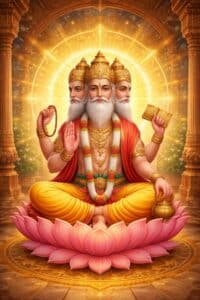
Brahma – Brahmasthan in Vastu : Meaning, Importance and Guidelines
Brahma - Brahmasthan in Vastu : Meaning, Importance and Guidelines
Mar