

The Heart of Classical Vastu
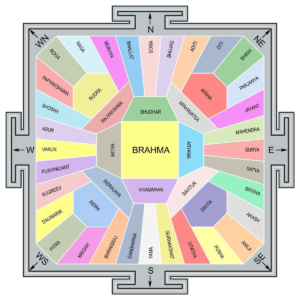
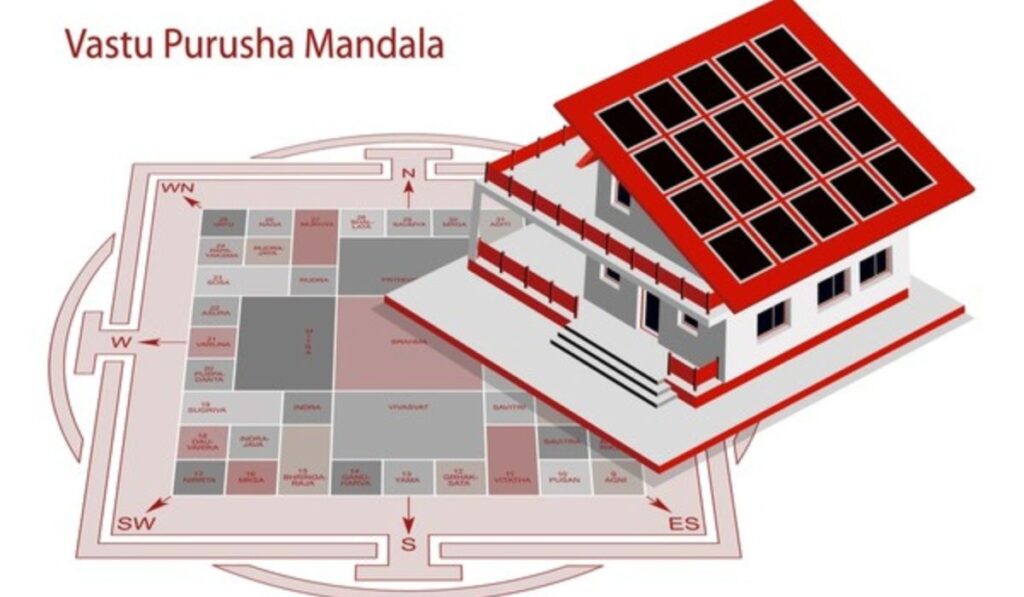
The Vastu Purusha Mandala forms the core foundation of Vastu Shastra. Without a clear understanding of this mandala, Vastu practice often reduces to scattered advice instead of a structured and coherent system. Classical texts describe the mandala as an energetic blueprint that governs how cosmic and terrestrial forces move across land and built spaces. As a result, it provides the essential framework through which Vastu operates as a science rather than a belief.
Rather than treating the Vastu Purusha Mandala as a symbolic diagram, classical Vastu recognizes it as a functional energy grid. This grid enables a consultant to identify zones where energy flows freely, areas where it encounters resistance, and points where structural stress subtly influences life experiences. Consequently, accurate interpretation of the mandala allows Vastu analysis to remain precise, logical, and outcome-oriented.
What Is the Vastu Purusha Mandala?
The Vastu Purusha Mandala consists of a square grid divided into equal sections, each representing a distinct energy zone governed by natural forces and cosmic intelligence. Importantly, the mandala aligns strictly with the cardinal directions and magnetic north, ensuring consistency with natural energy movement.
According to classical understanding, every structure rests upon the Vastu Purusha—an energetic principle that defines both sensitive and supportive zones within a space. When construction practices, weight placement, interior layouts, or usage patterns disturb these zones, environmental stress begins to develop. Over time, this stress manifests as resistance in daily life rather than as immediate or dramatic disruption.
Why the Square Is Essential in Vastu
The square represents the most stable geometric form in Vastu Shastra. Because it allows energy to circulate evenly, it prevents both excessive acceleration and stagnation. For this reason, square and rectangular plots consistently receive preference in classical texts.
In contrast, irregular shapes—such as triangles, major cuts, or excessive extensions—interrupt the natural flow defined by the mandala. Gradually, these disturbances may appear as instability, recurring obstacles, or health-related concerns. However, rather than rejecting such plots outright, Vastu Verma evaluates them carefully. Through thoughtful zoning and corrective planning, balance can often be restored without drastic intervention.
Directional Zones Within the Mandala
Each zone within the mandala corresponds to specific life functions:
-
North-East: Growth, clarity, wisdom
-
East: Health and vitality
-
South-East: Fire, action, financial movement
-
South: Discipline and regulation
-
South-West: Stability, savings, authority
-
West: Creativity and completion
-
North-West: Movement and communication
-
Center (Brahmasthan): Balance and opportunity
When activities conflict with the natural purpose of these zones, resistance increases in the related areas of life.
The Brahmasthan: The Most Sensitive Zone
The Brahmasthan, located at the center of the structure, governs overall harmony and balance. This area must remain light, open, and unobstructed to support smooth energy distribution. Heavy construction, staircases, or toilets in this zone frequently lead to stagnation, mental confusion, and lack of direction. Therefore, classical Vastu places the highest priority on protecting the integrity of the Brahmasthan.
Practical Application in Homes and Offices
The Vastu Purusha Mandala actively guides several critical decisions, including:
-
Room placement
-
Weight distribution
-
Activity zoning
-
Remedy prioritization
At Vastu Verma, Anil Verma applies the mandala to distinguish between active and dormant defects. This approach prevents unnecessary remedies and ensures that corrections remain precise, minimal, and responsible.
Vastu Purusha Mandala
The Vastu Purusha Mandala transforms architecture into a living system. When respected, it supports stability, prosperity, and peace. When ignored, even beautiful structures may struggle energetically.